
Best Fire Extinguisher For Your Home
While it isn’t mandatory to have a home fire extinguisher, some homeowners see it as an added layer of insurance to tackle the beginning of a controllable fire.
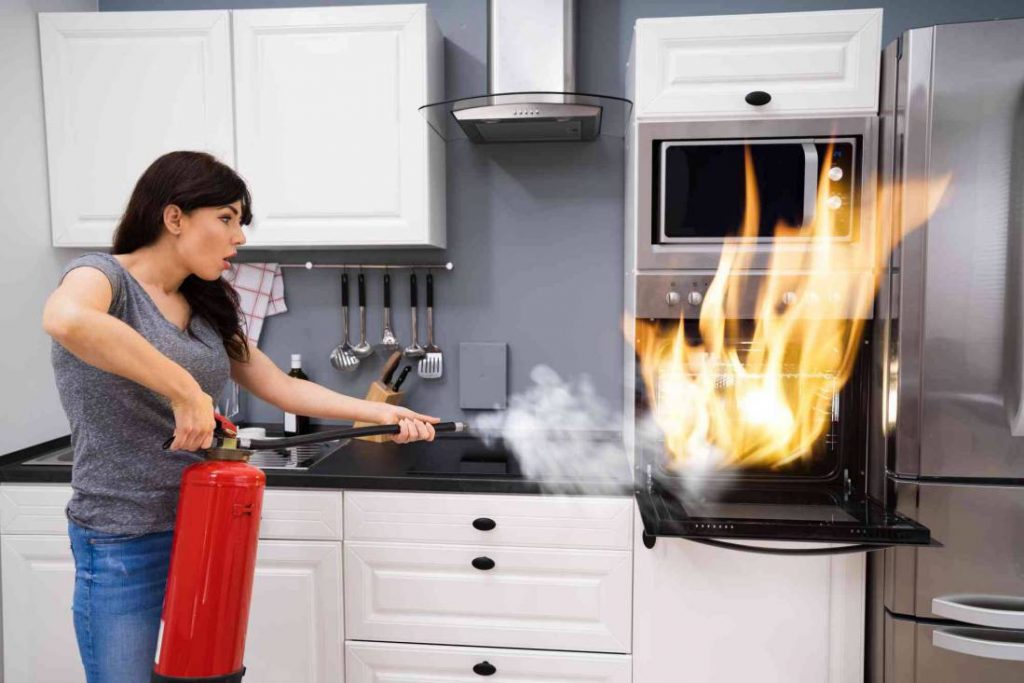
Every home should have at least one fire extinguisher. You never know when might prove to be useful. If you're interested in picking up a fire extinguisher to protect your family, but don't know which type to get, this guide is for you! Read on to learn about the different types of fire extinguishers and how they can help you protect your loved ones.

Fire safety is important to everyone; both children and adults should be mindful of their surroundings at all times.
If you’re unsure of what you need, then read our guide and learn about the different types of extinguishers. We detail how different ones can tackle different fires.
On this page, we pick our favourite ones for each type and list them below. Remember, if in doubt always call the fire service.
Best Dry Powder Extinguisher
Kidde KSPS1X
Our Rating (4.5/5)
Check Price at Amazon
- Manufacturer: Kidde
- Weight: 1.41 Kg
- Product dimensions: 31 x 9 x 9.5 cm
This Kidde KSPS1X is a traditional home fire extinguisher, fully approved for use in the event of a fire and as a means to clear a route to safety and as long as used when safe to do so, can also limit damage to property and possessions, also ideal to store in your vehicle.
For use with A, B or C category fires.
- A: Wood, paper.
- B: Flammable liquids, petrol.
- C: Gaseous fires.
Positives
- 7.8 second discharge duration
- 5A 34B C fire rating
- 6-year warranty
And the not so good...
- No instructions for wall mount
- Feels heavier than the listed 1.41kg
Best Water Extinguisher
Amerex 240
Our Rating (4/5)
Check Price at Amazon


- Manufacturer: Draper
- Weight: 16 Kg
- Product dimensions: 73.3 x 20.3 x 21 cm
This water extinguisher is effective on paper, cardboard, wood, textiles and similar materials. It can be used on class A fires and comes with a 13A rating.
It is a heavy and bulky item, so you'll need to be able to lift 16kg off the floor or wall mounted bracket. It does come supplied with a wall mounting bracket with a readable pressure gauge.
For use on class A fires.
- A: Wood, paper.
Positives
- Refillable once used
- 13A rating
- 5-year warranty
And the not so good...
- Really heavy at 16kg
Best Foam Extinguisher
Amerex 250
Our Rating (4.5/5):
Check Price at Amazon


- Manufacturer: Fireshield
- Weight: 4.26 Kg
- Product dimensions: 12.4 x 12.4 x 39.1 cm
The Fireshield 2 litre foam fire extinguisher is a good sized item, ideal for the home and even your caravan and motorhomes.
The benefit of opting for a foam extinguisher is that there is less mess created. With a powder fire extinguisher, it is incredibly hard to clean up the mess afterwards i.e. you won't be able to salvage anything.
For use on class A and B fires.
- A: Wood, paper.
- B: Flammable liquids, petrol.
Positives
- Kitemarked to BS EN3 standard and certified
- Small sized, doesn't take up space
- 5-year warranty
And the not so good...
- A bit more expensive than other types
Buyers Guide to Picking A Home Fire Extinguisher
We have briefly gone over the right type of equipment you'll need in your home, depending on the kind of fire emergency.
This short buyers guide should go some way to further developing which one is the most appropriate.
Matching The Classes
Earlier on, we said that you should determine which class type you need e.g. if you need one for a chemical fire or for an a multi purpose one.
There are a few different classes of fire extinguishers available to help you put out fires in your home. The classes are A, B, C and D. Which class of fire you need will depend on the nature of the fire. We talk about this in the types of fire extinguishers article, so please read about this first before reading further.
If you don't have the patience to read it, then you might just want to opt for the multipurpose fire extinguisher.
Determine the right size
Why does size matter? Well, think about it like this: a small fire can be put out by a smaller extinguisher than a medium sized one. And if you're dealing with a really big fire…well, let's not go there.
Just as important - you might be limited in space in your kitchen or hallway, so this will limit the size that you buy.
If anything, you might not want to get something that weighs over 20kg as this might be too bulky and cumbersome for you.
Remember, most of these are going to be really heavy - even the small ones. So there's no need to get a commercial-sized one. if it's a large fire, then you shouldn't be dealing with it anyway.
Location and Placement of a fire extinguisher
A fire extinguisher can be a lifesaver when it comes to small fires in the home, and it’s important that you know where to place one for easy access.
The most obvious location for a fire extinguisher is in a kitchen or near the kitchen. In the kitchen there are typically several places that you should make sure to place your fire extinguisher:
- On the wall near where cooking can take place, such as in a pantry.
- In a cabinet, either on the wall above or below where you store food.
- Near one of those electrical outlets that has to be kept clear for safety reasons if you have young children in your home.
- In the laundry room near where your washer and dryer are.
Fortunately, the NFPA have produced a handy guide to positioning your extinguisher and we highly recommend it.

Regular Maintenance
These items do have an expiration date, so you should keep a lookout for this near the barcode area of the product.
You should also check the pressure gauge once in a while to ensure the product will work in case of an actual fire.
Also make sure that the nozzle is clear and nothing is impeding it i.e. if it's been stored in the kitchen, then there hasn't been a build up of oils or grease anywhere near the nozzle or handle. If so, then it needs to be cleaned off.
Also, check that it has been recently refilled if it's a multi-use extinguisher. You want to check now that there's enough water or foam in there. It's straight forward to top up if you have the know-how.
Summary
Fire safety should not be taken lightly, so we hope you managed to get some value out of this guide.
Remember, these are home extinguishers and not the ones used by professionals. In case of fire, always call the emergency services if you are at all fazed by the scope of the emergency situation.
Stay safe!
To read more about Family Safety, please click here.


Copyright © 2021 Alarms4Life